
Our History
QPASTT was founded in 1995 as a community-based, specialist rehabilitation service to support the needs and aspirations of survivors of torture and trauma. Since that time, QPASTT has supported over 60,000 people from refugee backgrounds to rebuild their futures here in Australia – to find healing and belonging in a community where they can thrive. QPASTT has supported thousands more Australians and service providers to become trauma-informed and better equipped to deliver culturally competent policies and services that ensure justice and equity for refugee survivors, their families and communities.
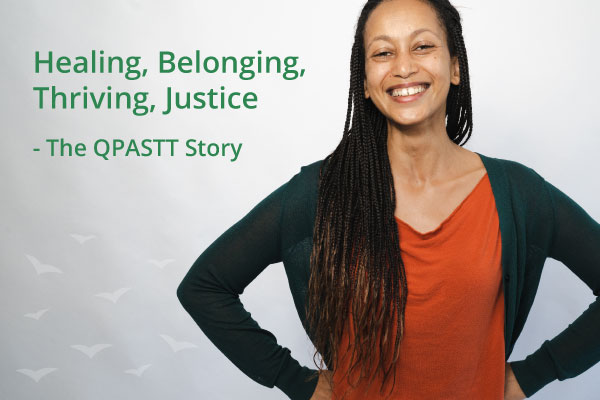
The strength and success of QPASTT is ultimately because it was established in response to the needs that were highlighted by the community itself.” – Rita Prasad-Ildes, Convener of the Brisbane Refugee Torture and Trauma Research and Support Group.

Publication size: 70mb
-
The Brisbane Women’s Health Centre undertakes consultation in response to concerns from women in Brisbane’s Latin American community that their needs as refugee survivors of torture and trauma were not being met.
1990 -

The Brisbane Women’s Health Centre established the Brisbane Refugee Torture and Trauma Research and Support Group to bring together people from refugee communities and service providers to advocate the needs of newly arrived refugees.
-

With a small grant from the Consumers’ Health Forum of Australia, the Brisbane Refugee Torture and Trauma Research and Support Group undertakes research with members of Brisbane’s Vietnamese, Cambodian, Salvadorian and Farsi-speaking communities, enabling survivors of torture and trauma to express their needs in relation to recovery and resettlement.
-

The Australian Government establishes the national funding program PASTT (Program of Assistance to Survivors of Torture and Trauma) and in December 1994 asks the Brisbane Refugee Torture and Trauma Research Support Group to establish a new, community-based service for survivors of torture and trauma.
-

The Queensland Program of Assistance to Survivors of Torture and Trauma (QPASTT) is formally created as an agency, charged with the responsibility of addressing the needs of refugee survivors in Queensland. QPASTT is located at Cottenham Street in Fairfield and employs three staff members, including inaugural Director Paula Peterson. QPASTT was officially opened on 5 December 1995 by then Minister for Health, the Hon Peter Beattie AC.
-
The Queensland Government matches federal funding to support refugee survivors in Queensland. By the end of 1995, QPASTT has doubled in size, employing six people.
-

QPASTT became an incorporated association on 7 May 1996. Dr Ian Mannion becomes Chair.
-
QPASTT receives a significant funding increase from the federal Department of Immigration and Multicultural Affairs and delivers services to newly arrived refugees through the Integrated Humanitarian Settlement Service (IHSS) program.
-
QPASTT establishes its Early Intervention model, providing psycho-social assessment to all refugees and humanitarian entrants.
-

QPASTT moves to Kalbe House at 118 Park Road, Woolloongabba.
-

QPASTT launches its Youth Development Program to support young survivors and to address and prevent the impacts of intergenerational trauma.
-
By 1999, QPASTT has established outreach on the Gold Coast, Toowoomba and Gatton.
-
The Australian Government introduces Temporary Protection Visas (TPVs) and releases hundreds of people from held detention into the community.
-
Demand for QPASTT’s services increases by 500% in 12 months as Australia receives people fleeing wars in Iraq and Afghanistan.
-
1 July – QPASTT’s Early Intervention Program is funded for 3 years to provide early health assessment and intervention for all new arrivals under the Australian Humanitarian Program.
-
The number of clients seeking asylum (on Temporary Protection Visas) increases dramatically.
2000 -
QPASTT establishes outreach services at the Logan and Beenleigh Migrant Resource Centre.
-

QPASTT establishes a Community Connections team encompassing our youth and community development work.
-

QPASTT establishes the Homework Club.
-
QPASTT launches its first formal Community Development Strategy after consultation with Queensland’s refugee communities.
-
QPASTT establishes a formal partnership with the Sudanese Community Association to provide culturally appropriate support to the emerging Sudanese community. In 2001/2002, the Sudanese Community was the largest community to access QPASTT’s services.
-
QPASTT and the Youth Advocacy Centre develop a submission to the Children in Detention Inquiry run by the Australian Human Rights Commission. The submission, endorsed by 25 agencies and individuals, is delivered on behalf of QPASTT by Ally Wakefield at the Brisbane public hearing on 5 August 2002. For electronic versions only: Read the QPASTT submission to the public hearing. Read the Human Rights Commission report ‘A last resort: National Inquiry into Children in Immigration Detention’ (2004) below.
. Loading...
-

QPASTT establishes the Queensland Integrated Refugee Community Health Clinic (QIRCH) in partnership with the Sisters of Mercy, the Sisters of Charity and the Mater Hospital.
-
QPASTT and the Multicultural Development Association join forces on an historic joint submission to Multicultural Affairs Queensland, resulting in funding for a full time position to support community development and systems advocacy work with Queensland’s African communities.
-

QPASTT begins delivering the POUCH (Promoting our Unity, Culture and Human Rights) program, supporting families through relationship counselling, group work and education to improve understanding and relationship cohesion among family members.
-

QPASTT celebrates its 10th anniversary.
-

Professor Emeritus Keithia Wilson becomes Chair of QPASTT.
-
The Karen community begins to settle in Brisbane
-
QPASTT develops Offline Weeks as a commitment to staff wellbeing and professional development.
-

QPASTT opens an office in Toowoomba with 3 staff members focused on supporting refugee communities in the region.
-

Tracy Worrall commences as Director (later CEO) of QPASTT. Paula Peterson finishes in the role after leading QPASTT for 12 years.
-
QPASTT experiences a 300% increase in clients seeking asylum.
-
QPASTT appoints a permanent Training Coordinator role to lead our training and capacity building for government, service providers and the broader community to support the aspirations of survivors.
-
QPASTT starts working directly with clients in held detention.
-
QPASTT begins outreach in Inala.
-

QPASTT hosts its inaugural event to commemorate the United Nations International Day in Support of Victims of Torture.
2010 -

QPASTT secures its new home at the Brisbane Multicultural Centre, taking up residence in June 2011.
-
QPASTT starts supporting people from the Hazara community in Rockhampton.
-
The Rohingyan community starts to arrive in Brisbane.
-
QPASTT begins providing support to people seeking asylum in held detention in Scherger, Weipa.
-
In October the Australian Government announces that it will begin moving significant numbers of children and families into community detention. A year later, in November 2011, the Government announced that selected people seeking asylum who had arrived by boat would be placed into the community while their asylum claims were being assessed.
-
Our regional services expand with the establishment of offices in Townsville and Cairns.
-
QPASTT establishes the Youth Voice project – a youth advisory council supporting young people to inspire change and strengthen their leadership.
-
In two years, QPASTT has doubled in size in both staff (growing from 30 staff to more than 60 staff) and budget (growing from $3m to $6m).
-
QPASTT starts delivering the Ucan2 program, developed by Foundation House. The activities in Ucan2 are designed to draw on young people’s experiences to provide activities focused on work skills, psychosocial support and the development of social connections.
-

By 2013, QPASTT has a permanent statewide presence in Brisbane, Logan, Toowoomba, Cairns, Townsville, Rockhampton and Weipa and has established a Regional Services Team.
-

QPASTT takes up the role of supporting the National Coordinator of the Forum of Australian Services to Survivors of Torture and Trauma (FASSTT).
-

Children and young people under the age of 25 now make up 47% of QPASTT clients, reflecting the increasing number of children and young people being displaced across the world.
-
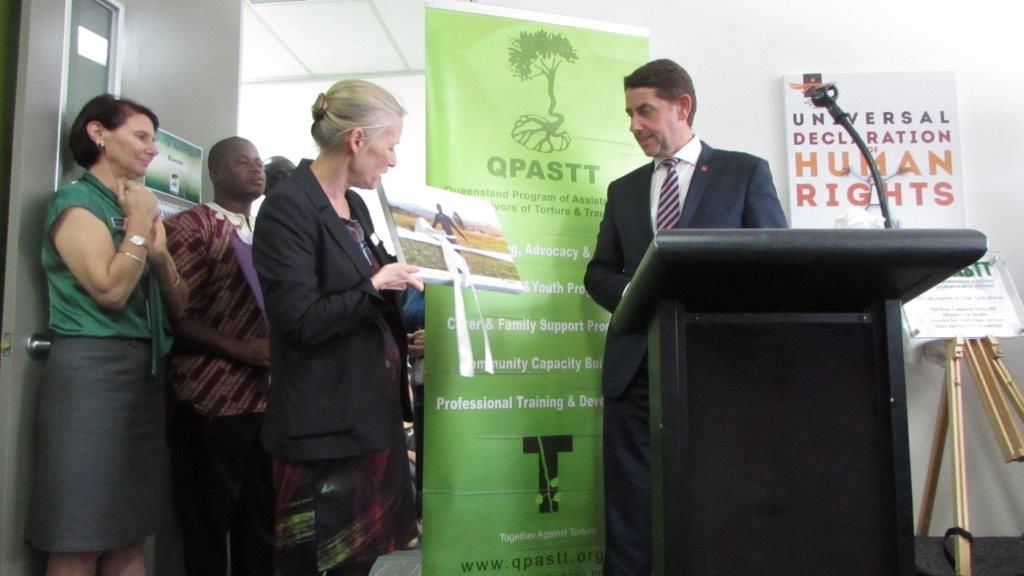
QPASTT purchases a property at Kingston to accommodate the expansion of our services in the Logan area, hosting the grand opening of our new office in 2016.
-
QPASTT’s Whole-of-School approach has been implemented in more than 60 schools to improve their capacity to respond to the needs of students from refugee backgrounds.
-
QPASTT launches the Nero system – bespoke client management software.
-
QPASTT establishes an office at the Inala PCYC.
-
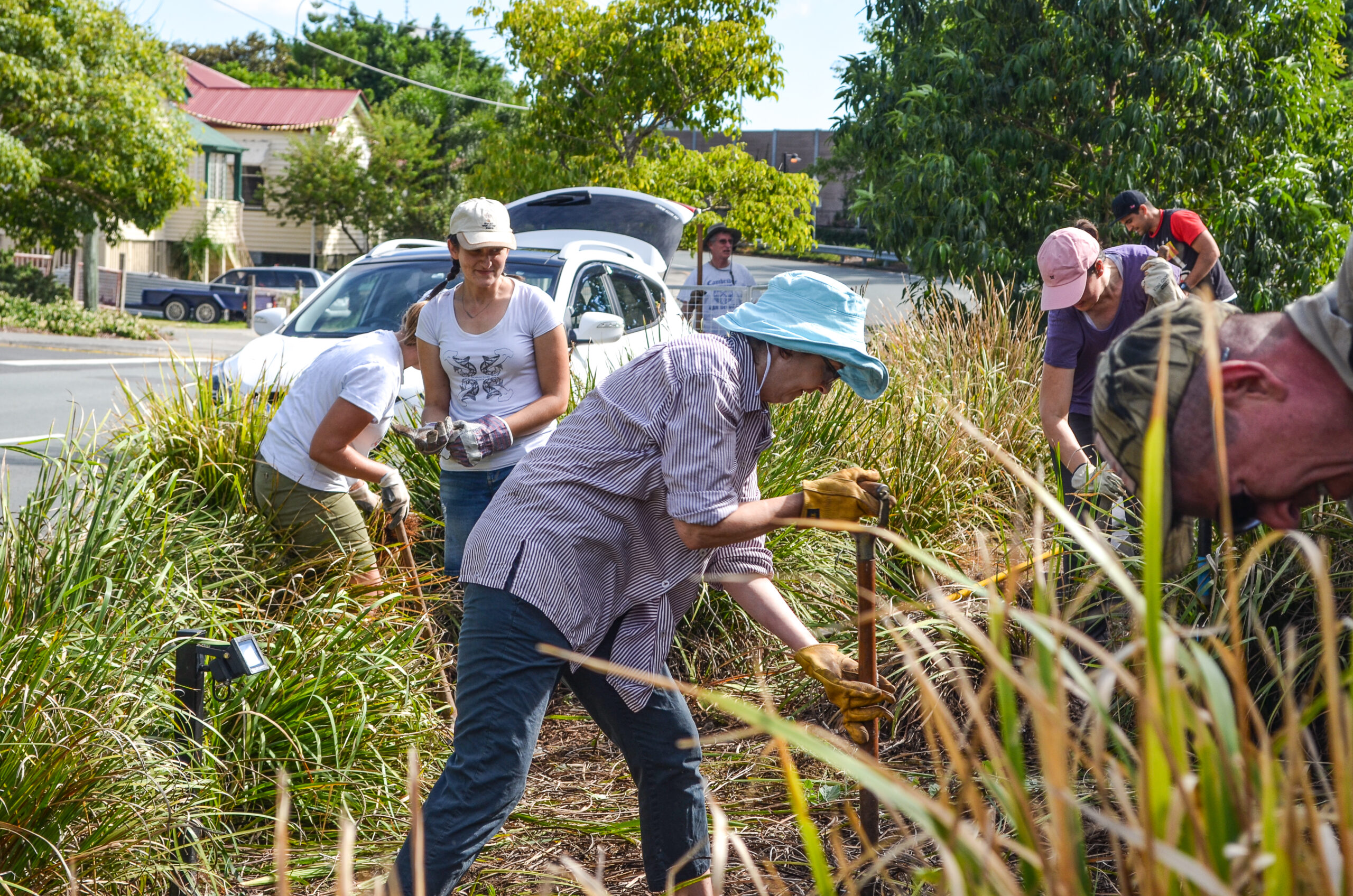
QPASTT plants a community garden at the Brisbane Multicultural Centre, a therapeutic space for our clients and communities to work in and enjoy.
-
QPASTT co-hosts a Parliamentary Lunch with the Honourable Cameron Dick MP, then Minister for Health, Minister for Ambulance Services and State Member for Woodridge. The lunch provides the opportunity for Queensland Members of Parliament to meet with the QPASTT Board and staff, refugee community leaders and youth leaders to address the concerning growing global acceptance of torture.
-
QPASTT supports members of the Syrian and Êzidî communities settling across South East Queensland after fleeing from war and genocide.
-
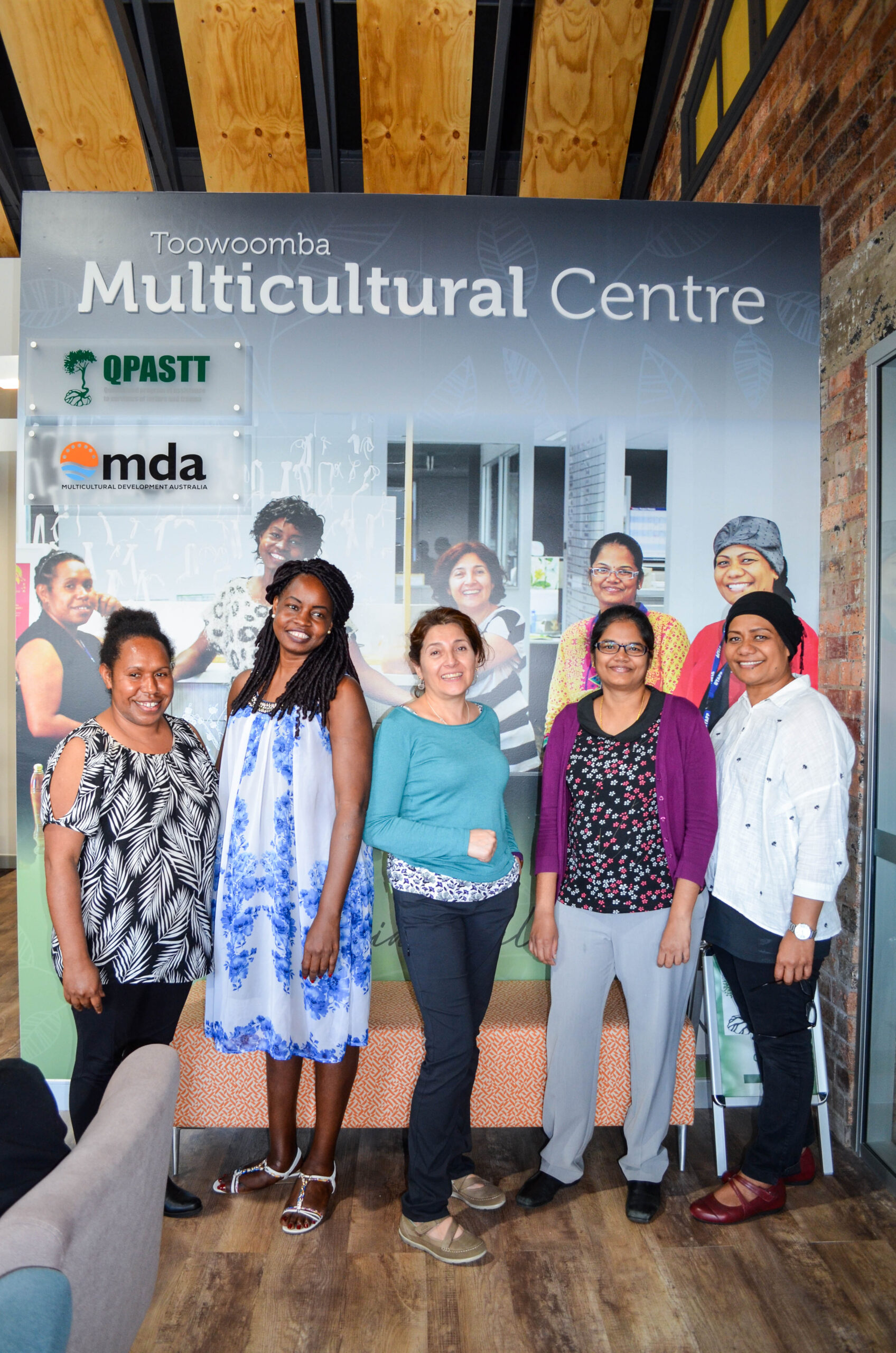
QPASTT purchases a property in Toowoomba to accommodate our expanded services in the region. The building in Snell Street is named the Toowoomba Multicultural Centre.
-
In March, QPASTT hosts the symposium ‘Healing in Exile’ in partnership with QUT’s School of Public Health and Social Work, leading a conversation with over 150 delegates about supporting the recovery of people from refugee backgrounds.
-
QPASTT’s client satisfaction rating is 97%.
-

In February, Jamila Padhee and Ignacio Correa-Velez commence as Co-CEOs, with a 3-month transition and hand over period with incumbent CEO Tracy Worrall.
-
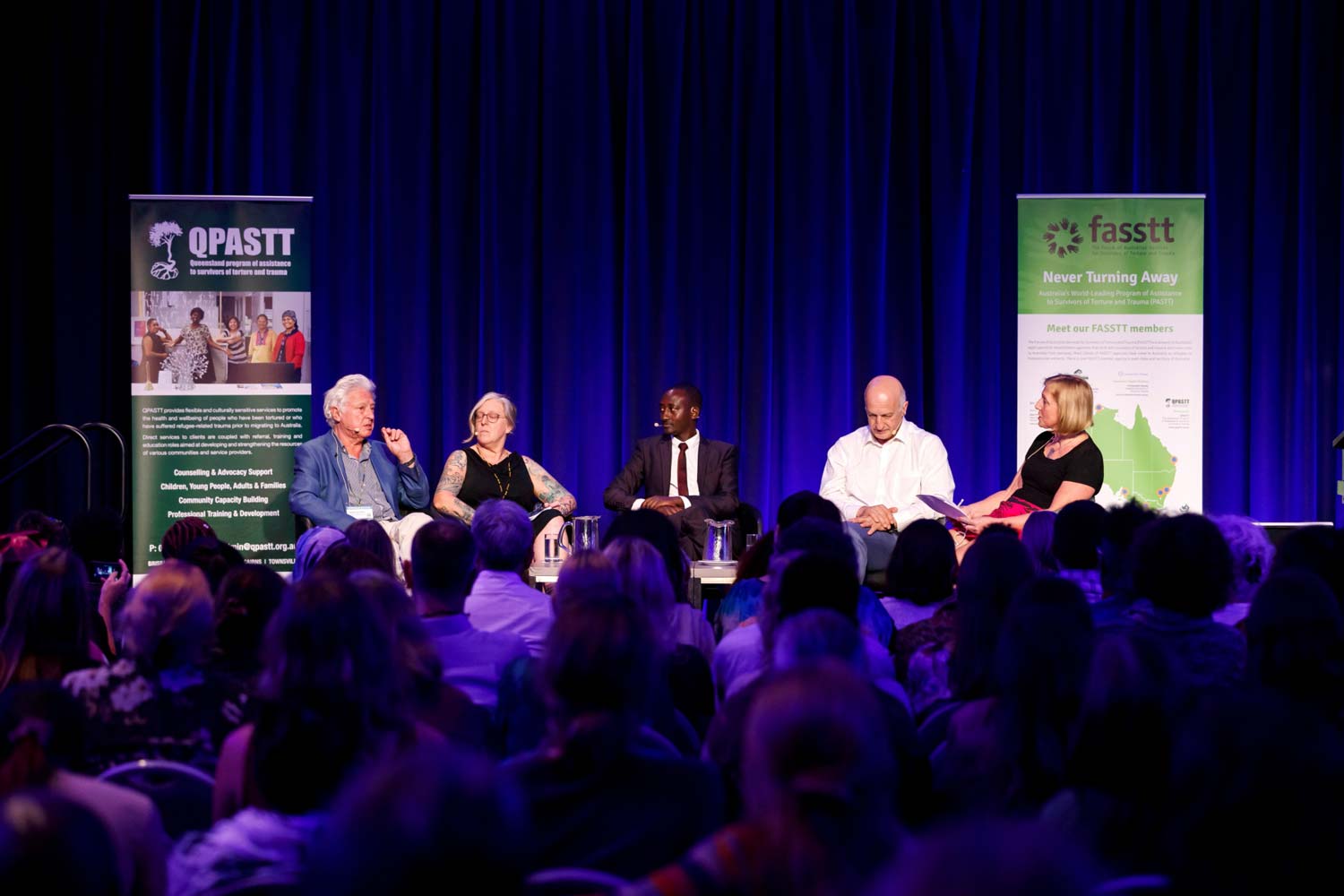
In March, QPASTT organises the 2nd Australia and New Zealand Refugee Trauma Recovery in Resettlement Conference – ‘Healing in Exile: Current and Future Challenges’ on behalf of the Forum of Australian Services for Survivors of Torture and Trauma (FASSTT).

 Reload document
  Open in new tab

